

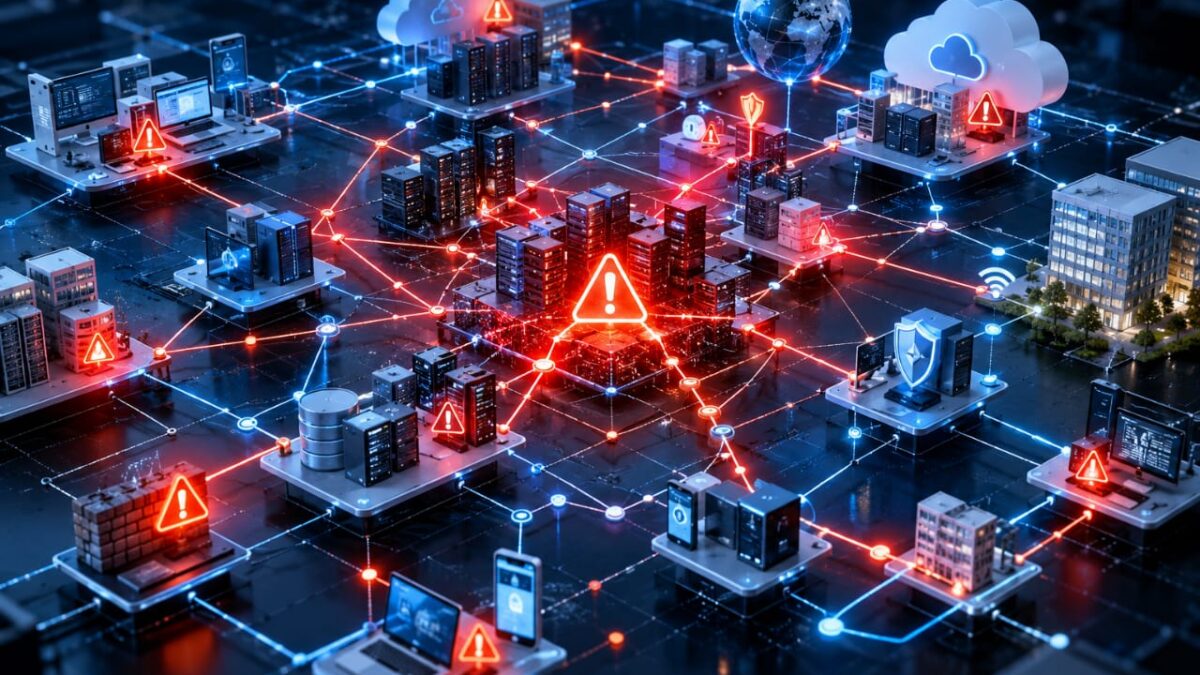
Cybersecurity has spent decades getting better at detecting events—suspicious logins, malware signatures, anomalous traffic, vulnerabilities and attempted intrusions. But today’s enterprises are increasingly interconnected and automated, while their security environments often remain fragmented across multiple systems, tools and alerts. Relying on these systems independently can leave critical gaps in understanding enterprise-wide risk.
Machines, meanwhile, are no longer simply executing predefined software instructions. Intelligent agents can access information, interact with applications, invoke APIs, perform tasks and, increasingly, make decisions with varying degrees of autonomy.
“As enterprises rapidly deploy autonomous AI agents, we are entering uncharted territory where machines can make decisions, not just execute code. Trinetra, powered by Structural Intelligence, ensures these intelligent non-human actors operate strictly within safe boundaries,” said Prateek Hak, CEO, Om Janah Solutions Pvt. Ltd

Another challenge comes from the multi-vendor cybersecurity and network environments within large enterprises. Identity systems, firewalls, cloud platforms, endpoint security, vulnerability management, network monitoring and application-security tools can each produce their own dashboards and interpretations of risk.
But vulnerabilities do not respect vendor boundaries. A systemic weakness may not exist neatly within any one system—it can emerge between systems and across technology boundaries.
Security analysts can therefore find themselves moving between multiple dashboards to reconstruct a single picture of enterprise exposure. Individual security products may each be functioning correctly, while the relationships between them create pathways that could potentially be exploited.
Structural Intelligence aims to provide a unifying layer across this environment.
Trinetra builds on existing cybersecurity investments by using available enterprise telemetry—including network flows, authentication data, asset inventories and API logs—to develop a broader understanding of relationships and dependencies across the organisation. The objective is to view the enterprise as one interconnected system rather than as a collection of individual security products.
A key principle behind Trinetra is its ability to identify gaps in visibility. Rather than assuming that monitored systems provide a complete picture of enterprise risk, Trinetra distinguishes between what has been mapped and what remains unobserved or insufficiently understood. Recognising these blind spots can be critical, as risks may emerge from areas that conventional monitoring does not fully capture.
As enterprises move towards environments where humans and intelligent non-human actors operate alongside each other, cybersecurity may need to evolve from monitoring individual events to understanding the structures, relationships and boundaries that determine what is possible within an enterprise.
Structural Intelligence represents an attempt to make that transition.
Trinetra’s proposition is to help enterprises understand their structural risk—so they can identify where vulnerabilities could emerge before those weaknesses become incidents.
