Census 2027 could give India the empirical basis to reconsider how social justice, representation and reservation are structured for Other Backward Classes
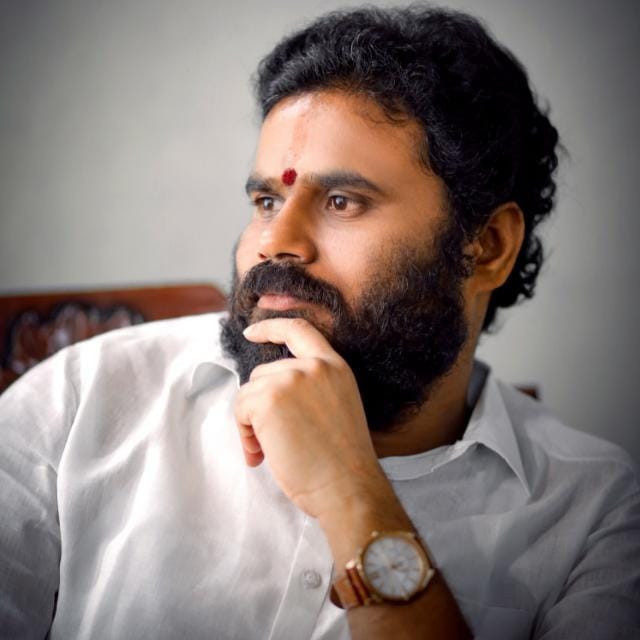
By Bode Ramachandra Yadav.
President, Bharatha Chaitanya Yuvajana Party.

Hyderabad: More than four decades ago, the Mandal Commission confronted a foundational question of Indian democracy: who are the socially and educationally backward classes, and how can the constitutional promise of equality become meaningful for communities that have historically remained outside the centres of education, employment and power?
The Commission’s 1980 report estimated that Other Backward Classes constituted roughly 52 per cent of India’s population. Because no contemporary all-India caste census existed, it relied substantially on the 1931 Census and other available data. It recommended 27 per cent reservation in Central government employment and higher education, which combined with existing SC and ST reservation to 49.5 per cent.
India of 2026 is not India of 1980. The country is now undertaking Census 2027, including caste enumeration during the Population Enumeration phase, the first full caste count since 1931. That creates an opportunity to ask a question that has stayed unresolved for decades: should the framework governing OBC representation be reconsidered once reliable contemporary caste and socio-economic data become available? That is not a question about percentages alone. It is a question about representation, equality and the structure of Indian democracy.
Mandal’s unfinished question
The Mandal Commission did not define backwardness in terms of income alone. Its framework centred on social and educational backwardness, supported by economic indicators, on the insight that deprivation in India can be structural and hereditary rather than purely financial. A person can be poor because of circumstance, but a community can remain disadvantaged across generations because of social exclusion and inadequate access to education and public institutions. The Commission’s 52 per cent figure was an estimate drawn from the evidence available at the time, not a contemporary count. That limitation is exactly why the absence of current caste data has mattered for so long.
There is a chronological point often lost in public debate. The Commission reported in 1980. The Supreme Court’s nine-judge Constitution Bench in Indra Sawhney v. Union of India came in 1992, twelve years later, and could not have shaped the Commission’s original recommendation. Rather, Indra Sawhney subsequently upheld the 27 per cent OBC quota while imposing constitutional limits on it, including the creamy layer exclusion and the 50 per cent ceiling.
What the Constitution actually says about 50 per cent
The claim that reservation can never cross 50 per cent is often treated as an absolute rule. It is more nuanced than that. In Indra Sawhney, the Court set 50 per cent as the general rule under Article 16(4), while allowing that it could be exceeded in extraordinary circumstances subject to strict justification. The Constitution Bench in Dr. Jaishri Laxmanrao Patil v. Chief Minister, Maharashtra (2021) reaffirmed that reservation under Article 16(4) should not exceed 50 per cent, and that crossing it requires the kind of extraordinary circumstances Indra Sawhney contemplated. It found that Maharashtra had not established those circumstances for the Maratha quota.
The legal question, then, is not whether 50 per cent is mathematically inviolable in every case, nor whether any state can cross it simply by legislating. It is whether the constitutional conditions for an exception are established with convincing evidence. That is exactly why the quality of future empirical data matters.
SC/ST representation and the constitutional distinction
There is a further distinction that deserves more public attention. For political representation, the Constitution expressly ties SC/ST reserved seats to population. Article 330(2) requires that SC/ST reserved seats in the Lok Sabha from a state bear, as nearly as may be, the same proportion to total seats as the SC/ST population bears to the total population. Article 332(3) applies the same principle to State Assemblies.
Government employment is structured differently. Article 16(4) speaks of a backward class that is not adequately represented in state services. Article 16(4A) enables reservation in promotion for SCs and STs, and Article 335 requires that SC/ST claims be considered consistently with administrative efficiency. Courts have repeatedly distinguished adequate representation from automatic proportionate representation, holding that the purpose of Article 16(4) is the former, not a population formula. That distinction should sharpen the debate, not close it.
The missing OBC question
The Constitution has never given OBCs a parallel system of reserved legislative seats comparable to Articles 330 and 332 for SCs and STs, and Mandal did not create one either. That leaves several separate questions on the table: should OBC political representation be reconsidered, should OBC employment reservation be reassessed against current representation data, and should promotion policy be revisited in light of existing provisions and precedent. These are distinct constitutional questions and should not be collapsed into a single demand for a single percentage.
Why Census 2027 changes the conversation
For decades India has debated OBC representation without national data to test its assumptions against. Census 2027 changes that. The Union Government has approved caste enumeration during the Population Enumeration phase, running nationally from February 2027, with Ladakh and the snow-bound districts already counted. A properly conducted dataset could let policymakers examine population share by group, regional variation, educational attainment, occupational patterns, and representation in public employment and higher education, along with whether particular communities remain under-represented despite decades of affirmative action.
That evidence has to be used carefully. Population share alone cannot determine a constitutionally permissible reservation percentage. But population data combined with evidence of social and educational backwardness and actual representation could give Parliament and state legislatures a far stronger basis to examine existing policy than Mandal’s 1931-derived estimate ever offered.
Beyond the 50 per cent debate
The most useful national debate is probably not “should 50 per cent be abolished.” It is closer to: does the present reservation architecture reflect the social, educational and representational realities of 21st-century India? If the data show substantial under-representation of specific communities, that is grounds to examine whether current policy is sufficient. If they show some groups have become adequately represented, that deserves scrutiny too. If they reveal sharp disparities within the broad OBC category, sub-classification and more equitable distribution of benefits may need renewed attention. Census data should not predetermine the answer. They should make it possible to ask the question with facts rather than 1980s assumptions.
Tamil Nadu and the exception that proves the rule
Tamil Nadu is often cited in this debate because its reservation framework reaches 69 per cent, but the history needs to be stated precisely. The Tamil Nadu Reservation Act was placed in the Ninth Schedule through the 76th Constitutional Amendment in 1994, a distinct route built specifically to shield it from the 50 per cent ceiling that Indra Sawhney had just laid down. It is not evidence that any state can exceed the ceiling by ordinary legislation. What it shows is that India’s constitutional architecture has, in one instance, accommodated a reservation structure above 50 per cent through a specific and difficult constitutional mechanism. That raises a fair question: if contemporary data establish social and representational realities substantially different from those available in 1980, should Parliament revisit the existing framework through deliberation and evidence, rather than treating 50 per cent as the last word?
Representation is also a democratic question
India’s democracy rests on universal adult suffrage, yet political representation, party nominations, public employment and institutional power are not distributed simply by population. The Constitution recognises that numerical representation matters in specific contexts, Articles 330 and 332 tie SC/ST legislative seats to population directly. The absence of a comparable mechanism for OBC political representation is a legitimate subject for constitutional debate, though such a debate has to reckon with the fact that constituencies are contested by individuals and parties, that reserved seats are only one part of representation, and that legislatures were never designed as exact demographic mirrors of society. The real question is not whether every community must receive power in mechanical proportion to its numbers, but whether India’s institutions provide meaningful and equitable access to representation and opportunity across historically disadvantaged groups.
What this debate should not become
None of this is a case for treating caste data as self-executing. Reservation policy still has to satisfy the creamy layer test, still has to withstand judicial scrutiny on adequate representation versus proportionality, and still has to reckon with legitimate concerns that expanding quotas without corresponding expansion of opportunity risks entrenching new forms of exclusion, including among OBC sub-groups that Mandal’s broad 52 per cent figure may have obscured. Critics of caste enumeration itself have also argued it could harden identity politics rather than resolve it, and that argument deserves a hearing alongside the case for better data. The point of Census 2027 is not to settle these disputes by headcount. It is to replace forty-year-old assumptions with evidence Parliament, the courts and the public can actually examine.
The next phase of the Mandal debate
Mandal answered the questions India could answer with the evidence available four decades ago. Census 2027 may give India evidence Mandal never had. Once the caste and socio-economic data are available and validated, Parliament has a responsibility to review political representation, public employment, educational access and promotion policy for socially and educationally backward classes, weighing population, social and educational backwardness, actual representation, intra-category disparity, the creamy layer principle, the 50 per cent ceiling and the jurisprudence built since Indra Sawhney.
The goal should not be to swap one assumption for another. It should be to replace old estimates with contemporary evidence. India’s economy, demography, education system and political structure have all changed since 1980. The real question is whether its framework of social justice stays anchored to the data of that earlier era, or whether the Republic uses new evidence to undertake the comprehensive review the Constitution’s framers left open. The caste enumeration will not answer that question by itself. But it can finally give India something it has lacked for decades: a contemporary empirical foundation for the conversation to happen at all.