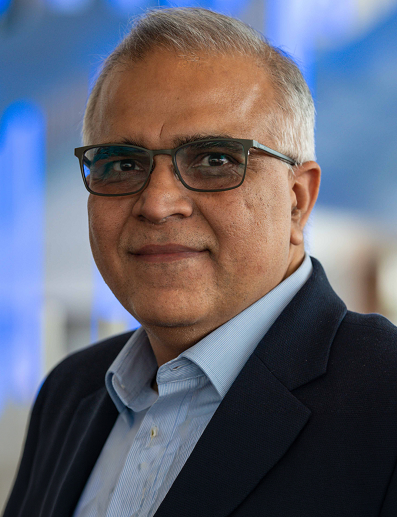
“Cybercriminals don’t always need advanced techniques to succeed. More often, they’re looking for the easiest route in, whether that’s a weak password, an unpatched application, an exposed account or an employee caught off guard by a convincing phishing attempt.”
“As organisations adopt AI and embrace new ways of working, the challenge is not just keeping pace with new threats, but reducing unnecessary opportunities for attackers. AI is helping cybercriminals make familiar attacks such as phishing, social engineering and identity-based attacks more convincing, scalable and difficult to spot. Security fundamentals, layered protection, employee awareness and responsible AI governance all play an important role in making attacks harder to execute and less likely to succeed. Together, these measures help build the cyber resilience organisations need to withstand and recover from evolving threats.”
Harish Kumar, CEO at Quick Heal Technologies Ltd.

“Cybersecurity Awareness Month is a reminder that cyber safety must become an everyday discipline. Cyber threats are no longer limited to conventional malware. AI-powered phishing, malicious websites, fake apps, digital impersonation and social-engineering scams are becoming more convincing, automated and scalable. With citizens losing thousands of crores annually to digital financial scams and our researchers at Seqrite Labs, India’s largest malware analysis facility, detecting over 500 cyberthreats every minute in India, the risk is immediate. The impact of such incidents can extend from personal financial fraud and identity theft to enterprise-wide data breaches and business disruption. As attackers increasingly exploit trust, individuals must pause before clicking, verify unexpected requests through official channels, use strong passwords with multi-factor authentication, and never share OTPs or credentials.”
“Keeping devices and software updated is equally important. Updates do not merely add features; they fix bugs, patch known security vulnerabilities and strengthen protection against emerging attacks. While a bug is an unintended flaw that may create a security weakness, even legitimate features can introduce risk when poorly designed, misconfigured or granted excessive permissions. To safeguard their digital health, users should enable trusted automatic updates and replace unsupported software.”
“For organisations, cybersecurity is both a technology priority and a business imperative. The average cost of an enterprise data breach in India has now crossed ₹25.5 crore, and with new-age technologies such as AI being extensively leveraged by threat actors, the number is expected to grow in the time to come. Defences are effective only when awareness keeps pace with the threat landscape. Enterprises need structured vulnerability and patch management, backed by layered security, continuous monitoring, and tested incident-response plans. Regular threat reports, whitepapers, and vulnerability advisories can help citizens and enterprises understand emerging attack techniques and act before damage occurs. At Quick Heal Technologies Limited, we firmly believe that cybersecurity begins with awareness, but succeeds only when timely intelligence is translated into consistent action.”
Amit Relan, Founder and CEO of mFilterIt
“Trust is the real currency of the digital economy, and today it is under sustained attack. Cybercrime no longer needs to break into systems; it exploits people, brands and the platforms they rely on. Digital arrest scams, phishing websites, fake apps, deepfake endorsements, brand impersonation and mule accounts are not separate threats. They are links in one chain, and AI is making every link more convincing.”
“No single stakeholder can break that chain alone. Platforms must verify who is advertising, brands must actively protect their identity, banks must act faster on suspicious and mule accounts, and consumers must pause before acting under pressure.”
“At mFilterIt, Digital Swachhta is our commitment to a safer, more transparent and accountable digital ecosystem. We intend to lead that effort, to keep the digital spaces we share clean and reliable.”