Founded by IIT Gandhinagar professor Dr. Atul Bhargav, Cellegant aims to overcome battery limitations and develop longer-endurance drones powered by hydrogen fuel-cell technology.
Ahmedabad: How long can a drone stay in the air before it needs to return for charging? For industries relying on drones for surveillance, agriculture, defence and emergency response, the answer can determine how effectively a mission is carried out. Addressing this challenge, GVFL has invested in Cellegant Energy Systems Private Limited, an IIT Gandhinagar professor-founded startup that has raised ₹26.1 million from investors including GVFL Prarambh Fund Trust, CoCreate Aarambh and IIEC, IIT Gandhinagar’s incubator.
The funding will support Cellegant’s development of indigenous hybrid hydrogen fuel-cell electric drivetrain systems designed, among other use cases, to keep drones and UAVs in the air for longer, while reducing dependence on conventional batteries and imported technologies. The startup’s immediate priority is to demonstrate a 35-kg hydrogen-powered drone, bringing its research closer to real-world applications. The technologies being developed will also find other use cases in civilian and strategic applications such as autonomous robots, high altitude heavy lift drones and humanoid robots.

Founded by Dr. Atul Bhargav, Professor at IIT Gandhinagar, Cellegant is developing energy solutions for drones, unmanned aerial vehicles (UAVs), marine and underwater vehicles, autonomous vehicles, quadruped robots and stationary power applications. Over the next six to twelve months, it aims to advance its 35-kg drone programme from technology readiness level three to six, a significant step towards demonstrating the technology in a relevant operating environment.
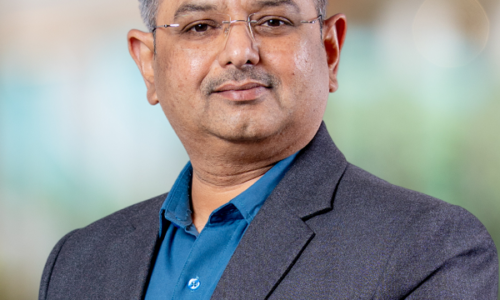
Mihir Joshi, Managing Director, GVFL, said, “India has made significant progress in indigenous technology development, but there is still considerable room for engineering solutions that address practical needs. What interests us about Cellegant is its focus on a clear challenge: powering unmanned systems for longer durations without compromising performance. We see promise in its technical capabilities and in the potential applications across strategic and commercial sectors. Supporting research-led companies as they turn ideas into usable products is an important part of our investment approach.”
The idea behind Cellegant emerged from a problem Dr. Bhargav encountered while working with government agencies and industry. Although India had expertise in fuel-cell technology, translating that knowledge into complete, application-ready systems remained challenging. Developing such solutions required expertise across mechanical, chemical and electrical engineering, along with specialised components that were often difficult to source domestically.
Drawing on his earlier product-development experience at Ballard Power Systems, Dr. Bhargav set out to bridge the gap between laboratory research and practical engineering.
Suresh from Aarrambh CoCreate added “Cellegent represents what deep scientific research from Indian institutions can achieve when translated into real-world applications. We believe its technology has the potential to transform energy-constrained systems. Atul’s journey could also set an important benchmark for Indian researchers aspiring to take their work beyond the laboratory.”
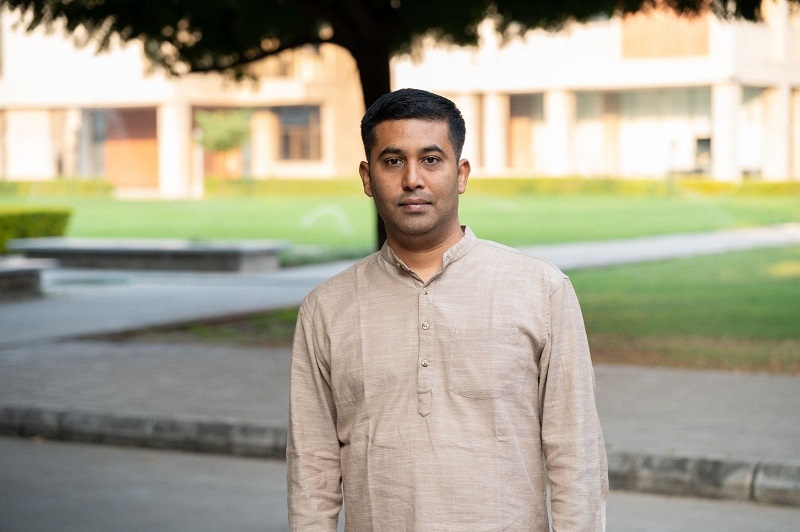
Dr. Atul Bhargav, Founder, Cellegant Energy Systems, said, “The challenge is not simply to develop a fuel cell, but to make the whole system work reliably outside the laboratory. If a drone can remain airborne longer, it could make a real difference in surveillance, emergency response or agriculture. Getting there means solving problems in hydrogen storage, electronics and power management together. We started Cellegant to turn years of research at our IIT Gandhinagar laboratory into products people can use. This funding gives us an opportunity to take the next step.”
Cellegant’s technology combines hybrid power management, passive hydrogen recirculation and solid-state chemical hydrogen storage approaches to improve energy density and endurance. The company has demonstrated hydrogen fuel-cell systems for UAVs and a custom-designed drone for long-endurance powerpacks. Earlier research from the same research group at IIT Gandhinagar also included methanol-based fuel-cell systems and diesel reforming for naval applications.
The potential applications extend from defence and paramilitary operations to agricultural drones and aerial cargo transportation. These remain prospective markets rather than confirmed commercial deployments.
At a time when India’s National Green Hydrogen Mission is encouraging domestic innovation, Cellegant’s work reflects the growing opportunity to develop specialised energy technologies within the country. The company plans to utilise the investment for further technology development, intellectual property protection and team building.
For Cellegant, the next milestone is to demonstrate that its hydrogen-powered systems can perform beyond controlled research settings. For GVFL, the investment represents an opportunity to support homegrown engineering that could help shape the future of unmanned mobility in India.