In a world increasingly divided by geopolitical tensions, economic uncertainty and regional conflicts, the successful conclusion of the 18th BRICS Summit in New Delhi stands out as a remarkable diplomatic achievement for India.
Under the leadership of Prime Minister Narendra Modi, the summit concluded with the unanimous adoption of the New Delhi Declaration, demonstrating that consensus remains possible when nations engage with mutual respect and a shared vision for development.
For two days, New Delhi became the focal point of global attention as presidents, prime ministers, ministers and senior officials from across the BRICS nations and partner countries gathered in India’s capital. The participation of leaders from China, Russia, Iran, Africa, the Middle East, Latin America and Asia transformed New Delhi into the political and diplomatic centre of the Global South.

More importantly, the summit unfolded smoothly, reflecting India’s growing capability to host and lead complex international engagements.
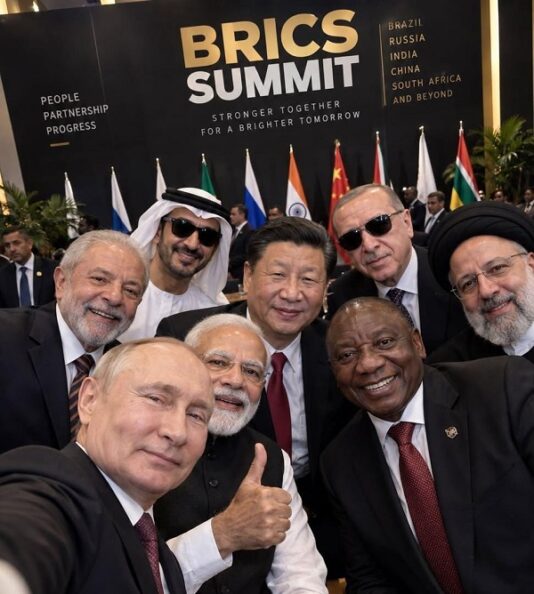
One of the most memorable images from the summit was the warmth visible among the participating leaders. Beyond official meetings and formal protocols, the photographs and interactions captured a spirit of cooperation and goodwill. In many ways, the now widely shared group selfie became symbolic of the summit itself—leaders from different political systems and regions coming together under one roof to discuss the future of the world.
The significance of the New Delhi Declaration lies not merely in its adoption but in its broad vision. Rather than focusing on narrow national interests, the declaration emphasized collective priorities such as sustainable development, economic cooperation, innovation, technology, energy security, food security, resilient supply chains, public health and reform of global institutions. It reflected a shared commitment towards dialogue, cooperation and peaceful progress.
At a time when international discourse is often dominated by conflict, the declaration offered a development-focused agenda aimed at improving the lives of people across nations.
The summit also showcased the growing stature of Bharat Mandapam, which once again emerged as a world-class venue for global diplomacy. Having previously hosted major international gatherings, Bharat Mandapam provided a fitting backdrop for BRICS leaders to engage in discussions on the future of economic growth, technology and international cooperation.
Alongside the summit, India highlighted its innovation capabilities through the BRICS Bharat Innovates initiative, showcasing deep-tech solutions, research and entrepreneurship. This reinforced India’s position not only as a diplomatic power but also as a nation increasingly contributing to the global technology and innovation ecosystem.
Among the most meaningful moments of the summit was the joint tree plantation ceremony by BRICS leaders. The planting of a banyan tree carried deep symbolism. In Indian thought, the banyan represents longevity, strength, interconnectedness and growth. It was a powerful reminder that enduring partnerships, much like great civilizations, are built over time through trust, cooperation and shared purpose.
Beyond the meetings, declarations and ceremonial events, the summit projected something deeper about India itself.
For centuries, Bharat has championed ideals of peaceful coexistence, dialogue and collective welfare. The ancient Indian philosophy of “Vasudhaiva Kutumbakam”—the world is one family—found contemporary expression in the way India hosted the summit and facilitated consensus among diverse nations.
The successful conduct of the BRICS Summit demonstrated India’s unique ability to engage with multiple regions and viewpoints while maintaining credibility across geopolitical divides. It reinforced New Delhi’s emergence as one of the world’s most important diplomatic capitals and strengthened India’s role as a leading voice of the Global South.
The 18th BRICS Summit will be remembered not only for the New Delhi Declaration but also for the message it sent to the world: that cooperation remains stronger than confrontation, dialogue remains more productive than division, and development remains the most powerful common agenda for humanity.
As the world watched leaders gather in New Delhi, plant a tree for the future and endorse a shared vision for progress, India showcased not only its diplomatic capabilities but also the enduring strength of its civilizational values.
For Bharat, it was more than a summit.
It was a moment that reflected the confidence of a rising nation and the timeless wisdom of one of the world’s oldest civilizations.