The government’s strategic decision to raise capital expenditure to ₹12.2 lakh crore while maintaining fiscal discipline with a 4.3% GDP deficit is poised to drive India’s economic growth. With a high fiscal multiplier effect of 2–2.5x, this increased investment will directly stimulate economic activity and support overall GDP expansion. As infrastructure projects accelerate, sectors such as construction, technology, and logistics will attract substantial private capital, creating a robust environment for business growth.
Moreover, the rise in public spending will generate millions of jobs, fueling labor market growth and strengthening economic resilience. In the context of geopolitical tensions, India’s fiscal prudence and growing private investments underscore the country’s economic stability and global competitiveness. This infrastructure push is crucial in securing sustained investments, enhancing the economy’s long-term health, and reinforcing India’s position in the global market.
India’s Infrastructure Boost: 20% Spending increase signals confidence and growth

Ravi Krishnamoorthi, Group President – Strategic Initiatives at Rosmerta Technologies, notes that this boost in spending a 20% increase, signals both certainty and scale, enabling businesses to plan and invest with confidence. Coupled with disciplined fiscal management and a projected fiscal deficit of 4.3% through FY27, the government is ensuring macroeconomic stability, while initiatives like ECMS allocation, dedicated freight corridors, and coastal upgrades enhance efficiency and global competitiveness.
Tech & Digital transformation to revolutionize India’s infrastructure landscape
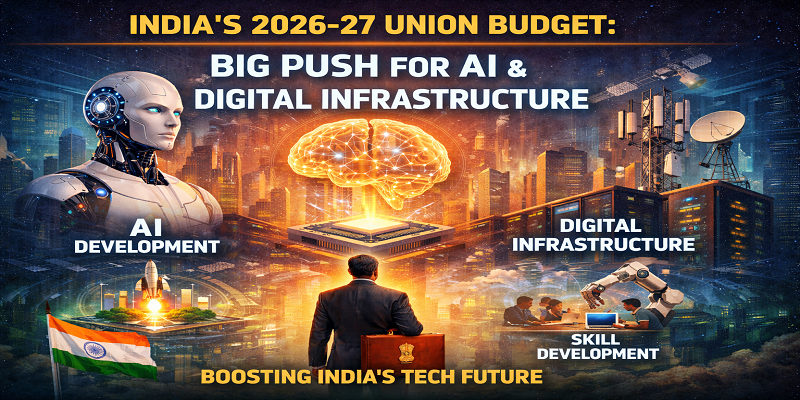
Alongside this, the government’s emphasis on technology and digital transformation is expected to be a game-changer for India’s infrastructure. Sunil Pandita, CDO of Nemetschek Group, highlights that the focus on AI, digital engineering, and predictive modeling will revolutionize the way infrastructure is designed, built, and maintained. With an emphasis on Tier 2 and 3 city development and robust freight corridors, India is preparing for an infrastructure ecosystem that is not only cost-efficient and sustainable but also future-ready. Through digital-first practices and technology-led innovation, these projects promise to deliver infrastructure that is smarter, safer, and more resilient.
Data-Driven infrastructure growth: Geospatial Intelligence drives innovation
In line with this technological evolution, Mr. Amit Sharma, Founder & Whole Time Director of Matrix Geo Solutions, observes a marked shift towards data-driven infrastructure growth. Precision geospatial intelligence is now at the core of project execution, particularly in sectors like transport, urban development, and water systems. With support for drones and AI, the industry is transitioning from static 2D models to dynamic 3D and 4D planning environments, drastically improving the speed and quality of delivery. This focus on technology and sustained public spending also has far-reaching implications across multiple sectors. According to Aman Moudgil, Director at Gilco Global, the ₹12.2 lakh crore boost will impact not just infrastructure but sectors such as real estate, transportation, healthcare, and industrial development. The ripple effects of these investments will ensure sustained growth, creating a robust foundation for the nation’s future.
Strategic investments propel clean-tech and energy transition
Union Budget 2026–27 has taken a decisive step towards strengthening India’s energy transition and clean-tech manufacturing. Rishi Srivastava, Co-Founder of Offgrid Energy Labs, highlighted the extended customs duty exemptions for battery storage and critical minerals, fostering long-term investment in energy storage. Mr. Karthik Raju of Atria Renewable Pvt Ltd noted that the Budget’s moves, such as exemptions for sodium antimonate in solar glass production, reduce costs and boost competitiveness, aligning with India’s ‘Make in India’ and net-zero goals. Dr. Chetan Shah of Solex Energy Limited emphasized that the focus on manufacturing, including exemptions for batteries and energy storage systems, solidifies India’s position as a global hub for clean-tech manufacturing, accelerating both energy security and industrial competitiveness.
Together, these strategic investments and technological advancements are shaping a vision of India’s infrastructure that is modern, competitive, and resilient ready to meet the challenges and opportunities of the coming decades. With clarity in direction and a focus on execution, the country is laying the groundwork for a sustainable, innovation-driven future.